

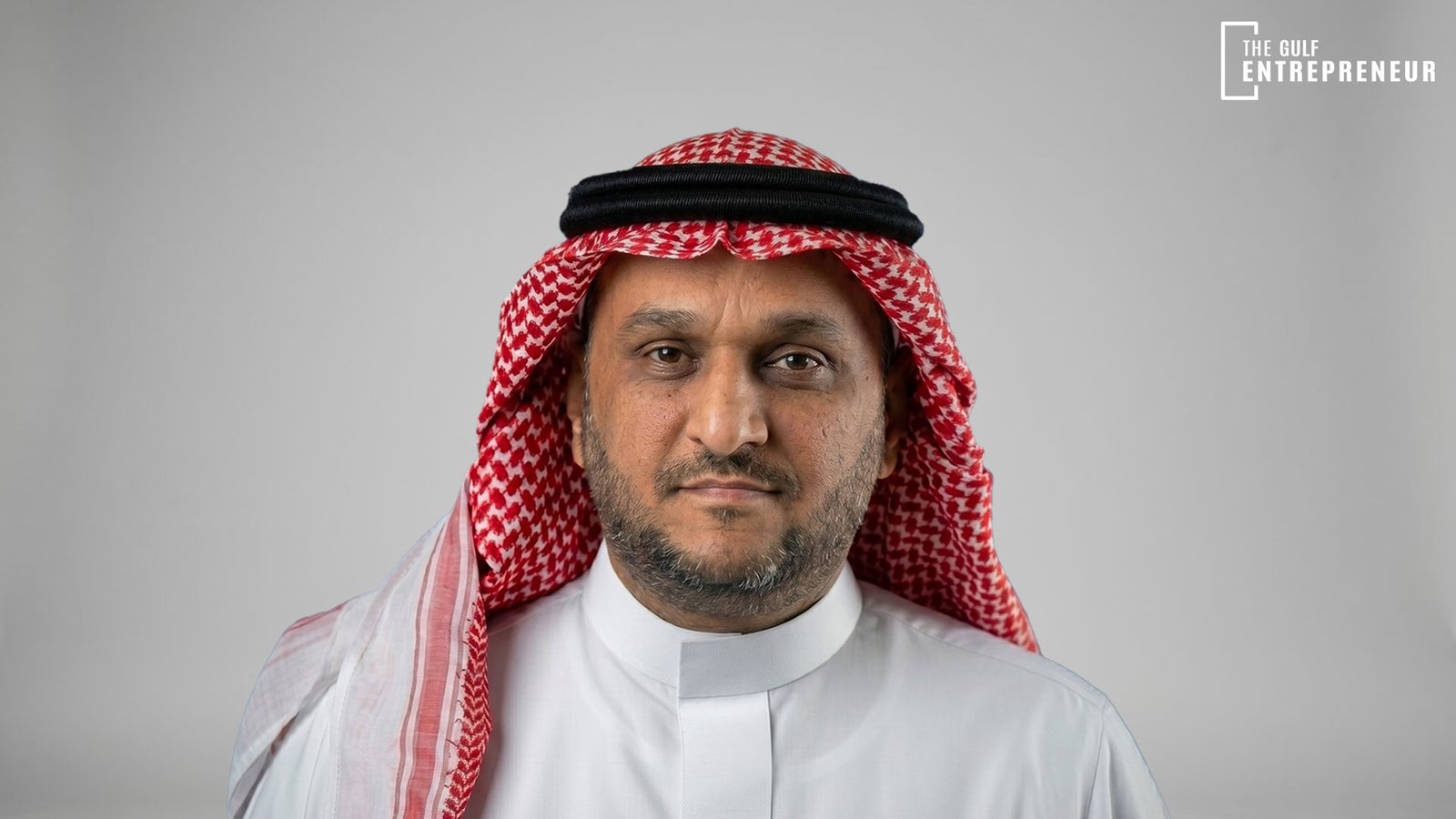

Dr. Majed Algarni: the man who is Engineering the Future of AI-Driven Organizations at WAKEB. Majed Algarni does not treat technology as a cycle of trends to follow or tools to deploy. For him, it is a long-term discipline, one that demands clarity of vision, structured thinking, and deliberate execution. As Founder and a leading board member at WAKEB, his mandate is sharply defined: to steward the company’s long-term vision, establish its technology doctrine, and guide its strategic trajectory.
This technology doctrine is not a static concept; it is a working principle that shapes how systems are designed, how decisions are made, and how innovation is sustained over time.
His role extends beyond internal direction. Algarni is equally focused on shaping the external ecosystem, forging high-impact partnerships, accelerating meaningful technology transfer, and enabling sustained horizontal and vertical expansion. Technology transfer, in this context, is operational: building capabilities, enabling ecosystems, and ensuring knowledge is embedded, not outsourced. It remains a recurring lever in how WAKEB scales both impact and independence across the organizations it supports.
When WAKEB AI was established in 2018, it was a move ahead of market timing. Today, Algarni’s focus has evolved from building a single organization to building multiple ventures and enabling new generations to build their own ventures. The ambition is clear: to create sustained impact across a broader innovation landscape, while ensuring organizations move into the AI era with confidence and low-risk execution, combining clarity with control.
Two Decades of Hard Lessons in Technology and Transformation
After more than two decades in ICT and digital transformation, Algarni’s perspective is grounded in one core reality: technology is never static, and continuous modernization is not optional; it is a strategic imperative.
Organizations that wait for maturity inevitably fall behind. The real advantage lies in positioning as early adopters, not to chase trends, but to internalize emerging technologies through hands-on development, deployment, and operational experience across domains and evolving cycles. True understanding is earned through execution.
This belief shapes how strategy itself is defined. Business strategy cannot be constrained by legacy operating models; it must align with the trajectory of emerging technologies. In practice, that means rapid exploration and controlled exploitation, ensuring organizations remain future-positioned, not merely future-ready.
Technological evolution, however, does not move at a single speed. Some systems evolve incrementally within months or quarters, while others require full-scale reinvention every two to three years. Managing this multi-speed reality is central to modern product lifecycle strategy.
Open systems and modular architectures are, therefore, foundational. They enable organizations to continuously absorb innovation, evolve operating frameworks, and maximize both immediate utility and long-term return on investment.
From Dependency to Ownership: Building Technological Sovereignty
A defining principle in Algarni’s approach is technological sovereignty. Sustainable advantage cannot be built on reliance alone; it requires ownership of platforms, architectures, and the underlying technology stack.
This extends beyond enterprise strategy into national capability building. WAKEB’s work is closely aligned with advancing the Kingdom’s AI ecosystem, strengthening indigenous platforms, enabling “Made in Saudi” innovation, and contributing directly to the Kingdom’s broader AI advancement agenda.
Ownership brings architectural freedom, eliminates licensing constraints, and reduces dependency. It allows organizations to move beyond vendor-driven roadmaps toward internally driven innovation, with stronger reusability across systems and use cases.
At WAKEB, this philosophy translates into execution. The company operates across domains and assumes multiple roles as a true partner with foresight and accountability, guiding strategy, readiness, roadmap design, and change management. The focus is on measurable value, clear ROI modeling, and lowest-risk transformation pathways.
The outcome is not simply AI adoption, but embedded capability integrated into value chains, enhancing productivity, creativity, and operational efficiency.
The Real Barriers to AI Adoption
Despite the momentum around AI, scaling it remains a challenge. The visible barriers, weak readiness, fragmented data, skill gaps, and uncertain ROI are only part of the story. Many organizations still pursue fashionable use cases that generate attention but fail to deliver substance.
The deeper issue is structural. In many cases, the limitation is not ownership at the executive level, but understanding. AI adoption is often approached as automation rather than as a catalyst for business model reinvention. This shift from automation thinking to reinvention is where real transformation begins, yet it remains underemphasized.
At the same time, rapid technological shifts continue to outpace traditional planning cycles.
WAKEB addresses this through a distinct model, an innovation engine built on rapid exploration and controlled exploitation. This principle is applied consistently, enabling organizations to experiment, validate, and scale with confidence while maintaining disciplined execution and minimizing risk.
Aligning AI with Strategy: From Incremental Gains to Full Transformation
Artificial intelligence does not sit alongside strategy; it amplifies it. At WAKEB, this is grounded in execution experience, including the completion of two strategic cycles well ahead of their original timelines.
The role, as Algarni describes it, is energizing, capturing immediate value while building a durable advantage.
Three pathways are typically applied. The first is an AI-enhanced approach focused on near-term gains, delivering rapid ROI with minimal investment. The second is an inside-out innovation model, enabling organizations to make decisive leaps toward scaled intelligence factories. The third is full AI-native transformation, requiring deep operating model redesign with strong agentic and generative AI integration.
Each pathway reflects a different level of ambition, but all demand alignment between strategic intent and disciplined execution.
Public and Private Sectors: Different Structures, Converging Futures
Both public and private sectors are advancing rapidly toward AI adoption, driven by a clear shift toward business-oriented outcomes where measurable value and sustainable impact define success. This transition reflects a broader mindset change, not just a technological one. It is further supported by technology-savvy leadership and an increasingly aware user base.
The difference lies in execution. Private organizations operate under competitive pressure and demand agility, while public entities function within standardized frameworks. Yet both are converging toward similar technology foundations, with growing demand for AI-native solutions.
As this convergence unfolds, differentiation will increasingly depend on data quality, creativity, and execution speed. At the same time, rising ambitions introduce new constraints, particularly in infrastructure complexity, operational resilience, and long-term sustainability.
In this environment, the role of technology partners is not persuasion; it is enablement. Translating vision into structured execution, with accountability, becomes the defining factor.
Redefining Executive Leadership in the Age of AI
Successful intelligence transformation is ultimately a leadership challenge. Executives must operate across multiple dimensions: strategist, futurist, architect, orchestrator, and sustainer.
They must align business and technology strategy, anticipate emerging shifts, structure and integrate initiatives, and ensure long-term value realization. Just as critically, they must translate ideas into scalable, production-ready systems.
This role demands a balance between technology centricity and user experience. Systems must not only function at scale, but deliver meaningful and usable outcomes.
Innovation vs Governance: Managing the Real Trade-Off
Balancing innovation with governance is not a binary decision; it is a structured trade-off.
During exploration, speed is critical. But as systems scale, governance, security, and compliance must be enforced rigorously. Over-regulation leads to stagnation and missed opportunities; under-regulation introduces operational, financial, and reputational risk.
The solution lies in modern governance that embeds security, transparency, accountability, and investment protection from the outset. This includes dynamic GRC models, human-in-the-loop systems, and safeguards against risks such as bias, hallucination, and unsafe automation.
It is equally important to recognize the current state of AI systems. Most deployed systems today operate within bounded, deterministic contexts and require significant human oversight. As autonomy increases, governance must evolve accordingly.
How AI is Reshaping Decision-Making
AI is reshaping decision-making by elevating not just speed and accuracy, but the overall wisdom of decisions.
Most organizations now operate in the decision augmentation phase, where human expertise and machine intelligence are tightly integrated. Decision support is becoming a smaller share of the landscape, while automation continues to expand selectively rather than universally, primarily in lower-complexity, well-defined tasks.
The real opportunity lies in classification, treating decision layers as a strategic asset. Organizations that clearly define which decisions should be supported, augmented, or automated gain a structural advantage.
This requires intelligent architectures, structured model catalogs, and robust governance. The rise of AI agents, capable of dynamically creating workflows and operating with minimal input, further accelerates this shift, enabling adaptive processes and real-time orchestration.
The Skills That Will Define the Next Generation of Leaders
The defining capability for future leaders is not using AI; it is building with it.
This includes AI-oriented software development, model design and fine-tuning, and domain-specific optimization. Working with agentic frameworks, configuring and orchestrating AI agents at scale, is becoming essential.
At the same time, interacting with generative AI is no longer a differentiator; it is a baseline professional skill. It is rapidly becoming as fundamental as spreadsheets or the internet once were. The real advantage lies in technical depth, architectural thinking, and execution capability.
Workforce transformation is equally critical. Structured pathways must enable role evolution, data annotation and engineering roles transitioning into AI system supervision and optimization, legal professionals moving into Responsible AI and governance, and analytical roles contributing to benchmarking and evaluation. These capabilities are increasingly transferable across domains, reinforcing long-term adaptability.
Preparing for What Comes Next
Organizations cannot afford to approach emerging technologies reactively. Preparation must be driven by structured foresight, moving beyond reliance on expert-only judgment toward AI-augmented intelligence.
Technology radars, expert networks, and advanced mechanisms such as knowledge graphs and ontology-based models enable early signal detection. This shift from traditional expert-driven foresight to augmented intelligence marks a fundamental evolution in how organizations anticipate and act on change.
Equally important is avoiding over-concentration on a single technology. Building adaptive capacity across domains ensures resilience, even as specific trends evolve or fade.
This reflects a broader evolution from on-premises systems to SaaS, and now toward locally controlled capabilities that offer greater flexibility, governance, independence, and reusability.
The Future of AI-Driven Organizations in Saudi Arabia
The next phase of AI adoption will not be incremental; it will be exponential. Organizations are expected to achieve productivity gains of three to four times current capacity, driven by agentic systems.
This transformation will reshape how human talent is deployed. As AI assumes repetitive workloads, human roles will shift toward creativity, domain expertise, and judgment, leading not only to higher productivity but also to more balanced workloads and improved work-life dynamics.
Importantly, this wave of transformation is likely to face less resistance than previous digital transformations. Organizations are entering the AI era with greater awareness and readiness, allowing adoption pipelines to scale rapidly once foundational investments are in place.
In Saudi Arabia, this shift is supported by a unique convergence: visionary leadership under Vision 2030, strategic geography aligned with global data infrastructure, strong investment in AI and data centers, and a growing base of technology-ready talent. Regulatory frameworks, innovation sandboxes, and funding mechanisms further accelerate progress.
At a systems level, the Kingdom is moving toward integrated physical AI platforms where energy, land, infrastructure, and computational capacity align to support large-scale intelligence systems.
For Algarni, this is not a distant projection; it is already unfolding. It is a trajectory WAKEB is actively contributing to through continuous exploration and exploitation of emerging technologies and sustained capability building across the ecosystem. The opportunity is real, immediate, and expansive. Organizations that build capabilities, align strategy with technology, and execute with discipline will define the future. The rest will spend their time trying to catch up.